Updates
ACT NOW! Submit your story to ArtLeaks and end the silence on exploitation and censorship! Please see the submission guidelines in the "Artleak Your Case" page
Submitted and current instances of abuse are in the "Cases" section
To find out more about us and how to contribute to our struggles, please go to the "About ArtLeaks" page
Please consult "Further Reading" for some critical texts that relate to our struggles
For more platforms dedicated to cultural workers' rights please see "Related Causes"
For past and upcoming ArtLeaks presentations and initiatives please go to "Public Actions"
Censorship Claims at Istanbul Museum of Modern Art
_____________________________________
Rumeysa Kiger reports for the Istanbul news source Today’s Zaman:
Earlier in the month, the museum had removed a work by Bubi Hayon (David Hayon) from its program for an invitation-only auction night titled “Gala Modern,” to which several artists had been invited to donate works of art or objects to in an effort to raise money for the museum’s educational programs. The piece was a wooden chair with a chamber pot for its seat. In response, Hayon issued a press release, arguing that the museum’s decision amounted to censorship. The museum, on the other hand, claimed that it had the right to choose which works of art to include in the event and that Hayon’s contribution had not met the proper criteria.
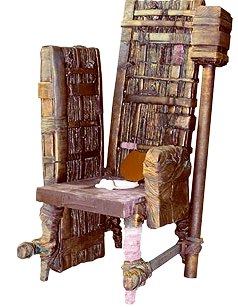
Artist Bubi Hayon’s work, “Oturak,” was removed from İstanbul Modern’s auction night Gala Modern.”
Artists announced on Monday through social networking sites that they had decided to devote the [aforementioned] panel discussion to such issues as transparency and private and public institutions as well as artists’ rights. The panel was initially organized as part of the museum’s ongoing exhibition “Dream and Reality,” a chronicle of the works of female artists from Turkey since the 1900s. But discussion at the event, attended by more than 80 members of the art scene took on a life of its own after panelist Mürüvvet Türkyılmaz announced that she would be withdrawing her work from the show in response to İstanbul Modern’s actions. The audience then raised questions and voiced concerns about an array of problems related to several forms of censorship dominating the current art world in Turkey, a lack of organization among artists and problems caused due to the fact that all major cultural institutions in the country are backed by various corporate entities and the lack of transparency in their activities.
The Istanbul-based Today’s Zaman published one of the first English-language articles on this conflict. They go on to explain that Türkyılmaz has been joined by seven other artists – Ceren Öyküt, Gözde İlkin, Güneş Terkol, İnci Furni, Ekin Saçlıoğlu, Neriman Polat, Leyla Gediz and the artist collective, AtılKunst, who have all requested that the museum remove their works from the exhibition in protest.
_____________________________________
Hrag Vartanian from Hyperalllergic also reports:
There are claims of censorship in Istanbul as eight artists and an artist collective have made a joint decision to withdraw from the Istanbul Modern museum’s ongoing Reality and Dream exhibition, which chronicles the works of female artists from Turkey since the 1900s. The controversy began when artist Bubi Hayon’s work was rejected during a charity auction for the Turkish museum then during a panel discussion at the museum earlier this week artist Mürüvvet Türkyılmaz announced that she would be withdrawing her work from the show in response to museum’s actions. The debate has since snowballed into a discussion about the role of contemporary art in Turkey and the problems associated with the fact that all major cultural institutions in the country are backed by corporate entities that lack transparency. […]
Hürriyet Daily News reports that on December 27 a number of artists entered Istanbul Modern with a protest banner that read “There is censorship in this museum.” The reporter also spoke to the artist who gave a context for the claims of censorship:
“First Istanbul Modern requested a work, without telling me any concept. They told me that they wanted to exhibit the work during the gala night and then make the work a part of the exclusive catalogue,” Bubi (David Hayon) told the Hürriyet Daily News.
The artist says the museum informed him he free to create what he wanted:
Upon this request Hayon created a large seat with a bed pan in the middle of it.
“With this work I have criticized the general museum idea which came from 1900s,” said Hayon, adding that he criticized the “sacred” idea of visiting a museum. “My aim was not to be political.”
However, things did not go as Hayon planned. The museum refused to collect the work and did not exhibit it. “It is not important whether they like it. There is something more important than that,” Hayon said.
The approach was more like a censorship process, according to Hayon. “The work was found contradictious and inconvenient.”
The International Association of Art Critics’s Turkish division and the strangely named Turkish National Committee of the International Plastic Arts Association are supporting Istanbul Modern’s position and they have offered their definition of censorship, which they claim can only be called as such if a third party, such as a government, a local authority, a ministry, a municipality or the police, were involved.
This debate comes at a time when Turkey is proving to be a growing presence in the international art scene with a burgeoning gallery scene, growing museum culture and contemporary art auctions that have attracted the attention of secondary market watchers.
________________________________
The artists currently boycotting the Istanbul Museum of Modern Art have started a petition online in Turkish/English, asking the institution to apologize to artist Bubi Hayon and the art community as a whole:
We observe that, Turkish branch of International Association of Art Critics (AICA) and Turkish National Committee of the International Plastic Arts Association (UNESCO AIAP) along with many artists who had chosen silence and mannerlessness, simply consider the behaviors of the market actors who take the “sensitivity” of the political and administrative powers, conservative bodies who has recently developed a passion for art collectorship as a threat and their interference with the artworks, as “the nature of commerce”. […]
We consider the whole course starting with the first moment of acceptance of the invitation, the creation of such an artwork, submission and the withdrawal and press release following to the applied fearless censorship, as Bubi Hayon’s “artistical existence, activity, production”, applaud “oturak” which, surely will gain “value” day by day, for underlining an issue with serious lack of awareness in Turkish art society, and declare that until an apology is made, we are not any longer interested in participating to any artistic platform organized by Istanbul Modern, at where may be some other time, the same “Oturak” (stool) is to be exhibited, by the same or a different chief curator and with it’s “submitted context untouched”.
Our guiding free spirit is awareness of our existence and surely is R. Mutt’s “Fountain.”
_______________________________________
More details around this case forthcoming. As of now the Istanbul Museum of Modern Art plans to go ahead with the exhibition Reality and Dream, without the works of the artists that have pulled out in protest. We thank the artists involved and their supporters for drawing our attention to this conflict and we will continue to report on the case.
UPDATES
We were informed earlier today (December 31) that the Istanbul Museum of Modern Art has released a public statement in response to the artists’ protest. The statement can be read here.
The week of January 16, just before the exhibition Reality and Dream ended, the museum erased and removed the works of the artists who had originally protested the exclusion of Bubi Hayon (David Hayon) by also asking their works to be taken down in solidarity. Istanbul Modern delegates also responded to the group that initiated the online petition calling for a boycott of the museum: they claimed that these artists had never been invited to the debates around the exhibition – debates which actually took place on the museum premises and at other venues. The museum again emphasized that this should have never been called “censorship” in the first place. The group of protesting artist insist they had been indeed invited in the exhibition and to the talks.
We have also been informed that the artists who participated in this the boycott and protest action have started to organize and are discussing plans to start their own union. ArtLeaks will continue to report on the mobilization in the art scene in Istanbul following this case.
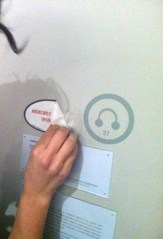
Atil Kunst's work being removed
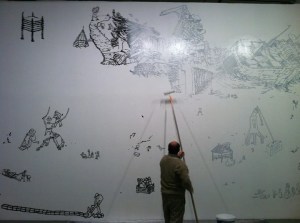
Ceren Oykut's wall paintings being erased
Free Philip Kostenko!
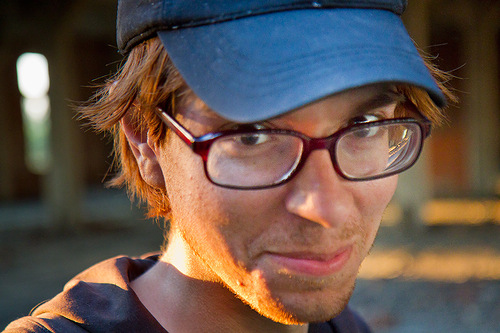
activist, artist and organizer Philip Kostenko
Voina member and human rights activist Pusha (Philip Kostenko) has been on hunger strike since his arrest on December 6, 2011. Activist Victor Demynanenko, also wrongfully arrested, has joined Pusha in his hunger strike. Their demand is to release all activists jailed as a result of the December 4-6 protest rallies.
Pusha was arrested near Gostiny Dvor in St. Petersburg during a peaceful rally against electoral fraud. He was charged under Article 19.3 (non-compliance with police orders). The case was heard by judge Alexei Kuznetsov, who is notorious among the opposition for accepting false police statements and for handing down harsh punishments.
Pusha is currently also facing criminal charges under Articles 214 (vandalism), 318 (using violence against a public official), 319 (insulting a public official).
Pusha (Philip Kostenko) is an activist, artist and organizer/participant in numerous protest actions. He is a member of the human rights organization Memorial and is active in the Food Not Bombs movement. Philip, who is an orphan, has faced regular harrassment from the law enforcement because of his protest activity. In 2011 alone, he was subject to 8 unlawful arrests. Philip was recently forced to abandon his home in St. Petersburg due to repeated searches and physical threats from the police.
We call on everyone to help support Philip Kostenko by spreading this information.
UPDATE: January 3, 2012 The Observatory for the Protection of Human Rights Defenders, a joint programme of the International Federation for Human Rights (FIDH) and the World Organisation Against Torture (OMCT), requests your urgent intervention on behalf of Philip Kostenko. Please write to the authorities of Russian Federation urging them to end the politically-motivated prosecution of this human rights activist. Details here.
_________________________________________
More information about Philipp Kostenko’s case here:
Kostenko Loses Release Appeal
By Sergey Chernov
The St. Petersburg Times
December 28, 2011
An appeals court on Monday refused to free Philip Kostenko, who after serving 15 days in prison was sentenced to another 15 days last week in what his lawyer describes as a “political reprisal.”
Originally, Kostenko, an activist and employee of the human rights organization Memorial Anti-Discrimination Center, was arrested amid spontaneous protests against electoral fraud near Gostiny Dvor on Dec. 6. The following day, the court sentenced him to 15 days imprisonment for an alleged failure to follow a police officer’s orders, the maximum punishment for such an offence.
On Dec. 21, Kostenko was not released after serving his term. As around 20 friends were waiting for him outside the prison on Zakharyevskaya Ulitsa, upon leaving his cell he was detained again by officers from the counter-extremism agency Center “E”, who took him to a police precinct, his lawyer Olga Tseitlina said.
Kostenko’s political views have been described as anarchist and anti-fascist, which would make him a “person of interest” to Center “E”.
The arrest was made on the basis of the fact that Kostenko did not appear in the court for a prior alleged offense, although at the time he was actually in custody.
This other case involved charges that Kostenko allegedly used foul language when bringing food parcels to arrested friends on Oct. 16.
During the hearing the following day, Judge Yelena Yermolina did not agree to summon the police officers on whose reports the sentence was based to testify as witnesses and be cross-examined, according to Tseitlina.
The testimonies of defense witnesses were dismissed by Yermolina, who said that she trusted the police officers’ reports.
In doing so, Yermolina deprived Kostenko of the right to a fair court hearing, which is a fundamental violation of Article 6 of the European Convention on Human Rights, of which Russia is a signatory, Tseitlina said.
“The entire prosecution is based on the policemen’s reports,” she said. “If a prison term is a possible punishment [for a crime], one of the fundamental rights is to examine the witnesses who testify against you.”
Tseitlina described the charges as “absurd.”
“Why should Kostenko come to a police precinct and swear in public?” she asked.
“Also, it was 11 p.m., with nobody around, so how could he have disturbed the peace? If we look at judicial practice, such an offense is never punished that strictly. Usually, it is punished with a fine.”
For the first 16 days of his detention, Kostenko held a hunger strike, which led to deteriorated eyesight. He ended it when the people who were in prison with him on the same charges were released.
“This is revenge, political reprisal and a measure to stop Kostenko from his protest activities,” Tseitlina said.
“Even if we allow that Kostenko did use foul language – which is not the case, because he’s not that type of person – the punishment is disproportionate. And we cannot rule out that something like this will happen when he is released next time.”
In a recent statement, Memorial described the continued detention of Kostenko as “obviously politically motivated.”
“For all intents and purposes, [the state] is continuing to persecute Kostenko for his involvement in protest actions,” it said.
Tseitlina would not give the expected date of Kostenko’s release, but said that he would see in the New Year in custody.
_____________
memorial.spb.ru and chtodelat news report:
The Persecution Continues: Filipp Kostenko Sentenced to Another 15 Days in Jail
December 22, 2011
On December 22, Judge E.K. Yermolina of the 153rd Judicial Precinct [in Saint Petersburg] sentenced Filipp Kostenko, an activist and employee of the human rights organization Memorial Anti-Discrimination Center, to another fifteen days of administrative arrest. For his involvement in mass protests against the rigged elections, Kostenko had already served fifteen days in jail, but in violation of procedure he was not released [as scheduled, on December 21].
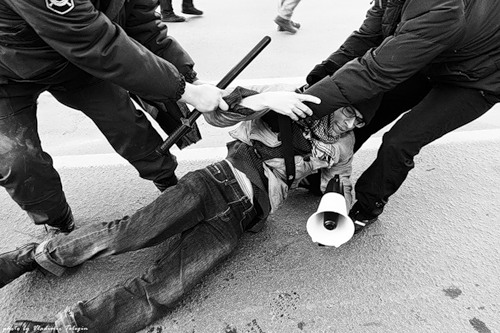
As we have previously reported, the decision for Kostenko’s compulsory delivery to court was sent to the administration of the detention facility [where he was serving his first sentence] a few minutes before his anticipated release. This decision was made due to the fact that Kostenko had failed to appear in court [on December 9], although at that time he was serving fifteen days of administrative arrest.
This time, the activist was charged under Article 20.1.1 (petty disorder) for allegedly using foul language two months ago, on October 16, outside the 43rd Police Precinct. According to witnesses, on this day Philip had brought food parcels for detainees [at the precinct]. He was arrested and taken into the precinct building, although he had not disturbed the peace. There are a number of witnesses who can confirm this, and a video of his arrest also exists.
The court hearing lasted four hours, including recesses. An officer from the Extremism Prevention Center [Center “E”] was in attendance as a “spectator” the entire time, and from the very outset there was the sense that the most adverse ruling was a preordained outcome. For no reason at all, the judge rejected all motions made on behalf of the defendant, including motions to give the defense adequate time to prepare its case and to call witnesses. The judge granted only one motion by the defense: to admit V.V. Kostyushev, a professor at the Petersburg branch of the Higher School for Economics, as a public defender.
Because, in the court’s opinion, there were no grounds for “not trusting the reports filed by police officers that Filipp Kostenko had disturbed the peace by expressing a clear disrespect for society, which was accompanied by swearing in a public place,” the judge also rejected a motion to summon the [arresting] officers to verify their testimony and cross-examine them. In contrast to the reports filed by the police officers, the oral testimony of defense witnesses, who personally appeared in court, was not acknowledged as credible by the judge.
Despite numerous procedural violations, the lack of any real evidence (except for the evidence of the police reports, which Judge Yermolina found “compelling”), and an energetic defense, it was obvious to all present that the judge would give Kostenko the maximum possible sentence. The judge was not even troubled by the presence in the courtroom of numerous spectators and journalists (who, incidentally, were strictly forbidden from photographing anything or even making audio recordings).
Consequently, Judge Yermolina sentenced Kostenko to another fifteen days of arrest, and he has again been delivered to the detention facility at Zakharievskaya, 6. In the coming days, his attorney will file an appeal against this decision, as well as filing a new complaint with the European Court of Human Rights in connection with this new, illegal arrest (a violation of Article 6 of the European Convention on Human Rights) [see below].
In the absence of an independent and impartial judiciary, the continued detention of Filipp Kostenko is obviously politically motivated. For all intents and purposes, [the state] is continuing to persecute Kostenko for his involvement in protest actions.
____
Article 6 of the European Convention on Human Rights reads as follows:
1.In the determination of his civil rights and obligations or of any criminal charge against him, everyone is entitled to a fair and public hearing within a reasonable time by an independent and impartial tribunal established by law. Judgement shall be pronounced publicly but the press and public may be excluded from all or part of the trial in the interest of morals, public order or national security in a democratic society, where the interests of juveniles or the protection of the private life of the parties so require, or the extent strictly necessary in the opinion of the court in special circumstances where publicity would prejudice the interests of justice.
2.Everyone charged with a criminal offence shall be presumed innocent until proved guilty according to law.
3.Everyone charged with a criminal offence has the following minimum rights:
(a) to be informed promptly, in a language which he understands and in detail, of the nature and cause of the accusation against him;
(b) to have adequate time and the facilities for the preparation of his defence;
(c) to defend himself in person or through legal assistance of his own choosing or, if he has not sufficient means to pay for legal assistance, to be given it free when the interests of justice so require;
(d) to examine or have examined witnesses against him and to obtain the attendance and examination of witnesses on his behalf under the same conditions as witnesses against him;
(e) to have the free assistance of an interpreter if he cannot understand or speak the language used in court.
To follow this case and support Philip Kostenko please see Free Voina and chtodelat news.
UPDATE: On Thursday, January 5 2012, human rights activist Filipp Kostenko was released from detention in St. Petersburg, after a show of solidarity from the local community and international observers. He declared: “To evaluate the situation, I would call the events that happened to me political repressions. In spite of them, the fight will go on.” Read more here.
Lacoste Elysée Prize 2011 Suspended

courtesy of Mikko Lipiäinen
After news of the censorship of Larissa Sansour’s project “Nation Estate” (2011) spread internationally, the French fashion brand Lacoste decided to cancel its sponsorship of the Lacoste Elysée Prize, claiming that the real reason behind the exclusion was that they felt the artist’s work did not fit with the theme of the competition- “joie de vivre”(happiness). The Musée de l’Elysée also announced the suspension of the photography competition and made a public offer to Sansour to exhibit her original project.
We have update this case to reflect these developments, however we feel it is highly relevant to also re-publish the statements from Lacoste and Sam Stourdzé, director of the Musée de l’Elysée. We take this opportunity to congratulate the museum leadership for their decision to stand by the artist&her original vision and not concede to corporate demands. Finally, we wish Larissa Sansour all the best in her work and are proud to have represented her case together with other independent media.
Statement from Lacoste, Paris, 21 December 2011
As part of a partnership with Musée de l’Elysée and regarding the 2011 Lacoste Elysée Prize, Lacoste had approved the inclusion of Larissa Sansour as that of all other entries from the very beginning.
The highly-regarded artwork Ms. Sansour had already produced, for which she had won both critical acclaim and global recognition, was indeed an asset rather than something that could have been held against her at any time.
Lacoste and the Musée de l’Elysée commissioned projects to each artist in the shortlist. The theme was “joie de vivre” (happiness) and each contestant received EUR 4,000 to come up with a dedicated work.
Today, Lacoste reputation is at stake for false reasons and wrongful allegations. Never, was Lacoste’s intention to exclude any work on political grounds. The brand would not have otherwise agreed to the selection of Ms. Sansour in the first place.
After receiving works from all entries, Lacoste and the Musée de l’Elysée felt the work at hand did not belong in the theme of “joie de vivre” (happiness), which had been the case for other applicants at previous steps in the selection process.
After agreeing with the Musée de l’Elysée, the decision was made known to Ms. Sansour and she was presented by the Musée de l’Elysée with an offer to hold an exhibition of her works in a different forum.
Lacoste can only be saddened by the current situation. The sole goal was to promote young photographers and provide them with an opportunity to increase their visibility.
In light of this situation and to avoid any misunderstanding, Lacoste has decided to cancel once and for all its participation in this event and its support to the Elysée Prize.
Suspension of the Lacoste Elysée Prize 2011, Lausanne, 21 December 2011
The Musée de l’Elysée has decided to suspend the organisation of the Lacoste Elysée Prize 2011. Introduced in 2010 to sustain young photographers, the prize is worth 25 000 euros.
In the context of the 2011 edition of the prize, eight nominees were selected to take part in the contest. They were asked to produce three photographs on the theme la joie de vivre. With the help of an individual grant of 4 000 euros, each nominee had carte blanche to interpret the theme in which ever way they favoured, in a direct or indirect manner, with authenticity or irony, based upon their existing or as an entirely new creation. An expert jury should have met at the end of January 2012 to select the winner of the Lacoste Elysée Prize 2011.
The Musée de l’Elysée has based its decision on the private partner’s wish to exclude Larissa Sansour, one of the prize nominees. We reaffirm our support to Larissa Sansour for the artistic quality of her work and her dedication. The Musée de l’Elysée has already proposed to her to present at the museum the series of photographs “Nation Estate”, which she submitted in the framework of the contest.
For 25 years, the Musée de l’Elysée has defended with strength artists, their work, freedom of the arts and of speech. With the decision it has taken today, the Musée de l’Elysée repeats its commitment to its fundamental values.
Sam Stourdzé, Director of the Musée de l’Elysée
Lacoste: No Room For Palestinian Artist
French fashion brand Lacoste demands the removal of Bethlehem artist Larissa Sansour from major photographic prize.
The prestigious €25,000 Lacoste Elysée Prize is awarded yearly by the Swiss Musée de l’Elysée with sponsorship from Lacoste.
Larissa Sansour was among the eight artists shortlisted for the 2011 prize. In December 2011, Lacoste demanded that her nomination be revoked. Lacoste stated their refusal to support Sansour’s work, labeling it ‘too pro-Palestinian’. A special jury will convene in January 2012 to select the winner.
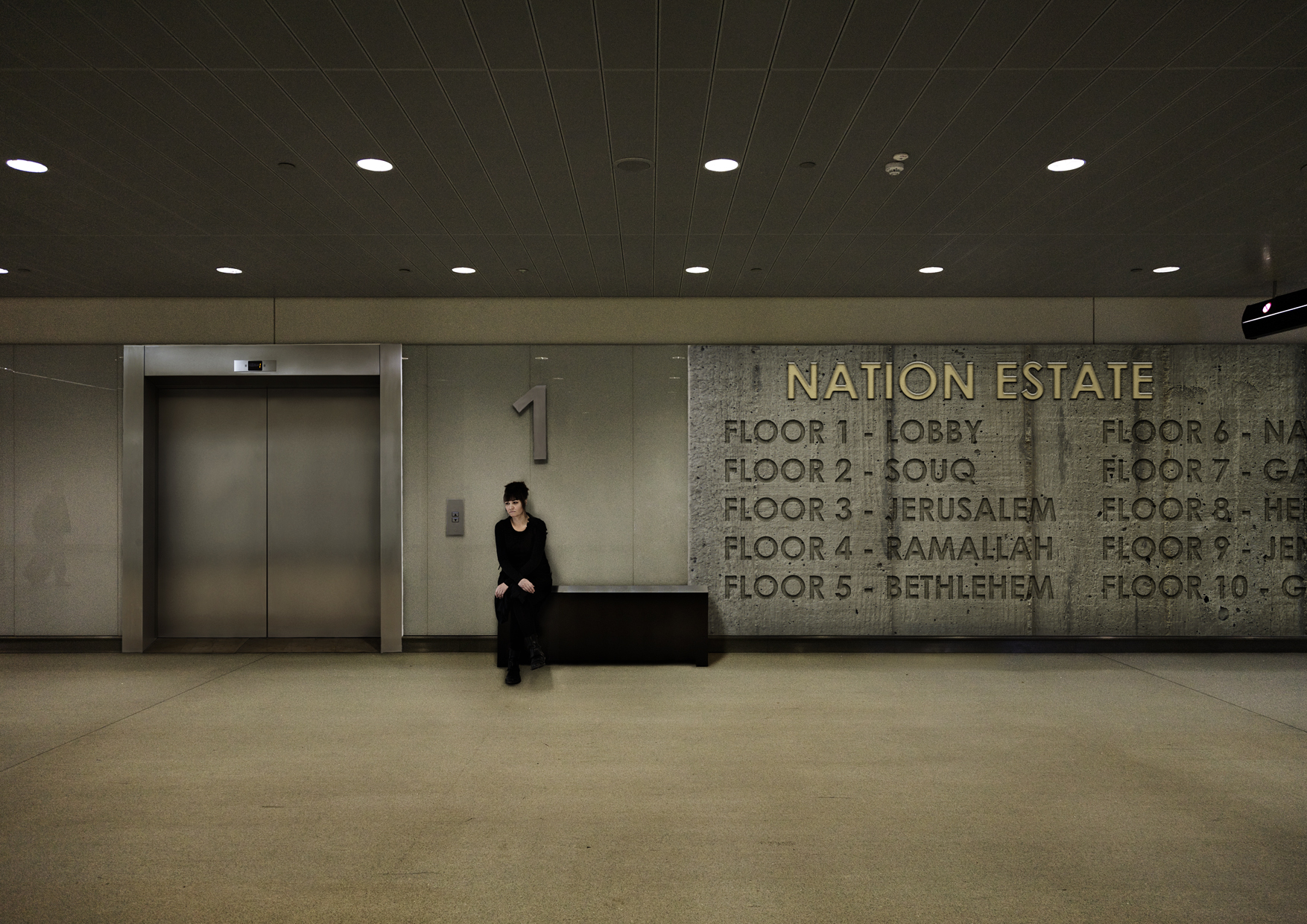
Larissa Sansour, Nation Estate - Main Lobby, 2011
As a nominee, Sansour was awarded a bursary of €4,000 and given carte blanche to produce a portfolio of images for the final judging. In November 2011, three photos for Sansour’s Nation Estate project were accepted, and she was congratulated by the prize administrators on her work and professionalism. Sansour’s name was included on all the literature relating to the prize and on the website as an official nominee. Her name has since been removed, just as her project has been withdrawn from an upcoming issue of contemporary art magazine ArtReview introducing the nominated artists.
In an attempt to mask the reasons for her dismissal, Sansour was asked to approve a statement saying that she withdrew from her nomination ‘in order to pursue other opportunities’. Sansour has refused.
Sansour says: “I am very sad and shocked by this development. This year Palestine was officially admitted to UNESCO, yet we are still being silenced. As a politically involved artist I am no stranger to opposition, but never before have I been censored by the very same people who nominated me in the first place. Lacoste’s prejudice and censorship puts a major dent in the idea of corporate involvement in the arts. It is deeply worrying.”
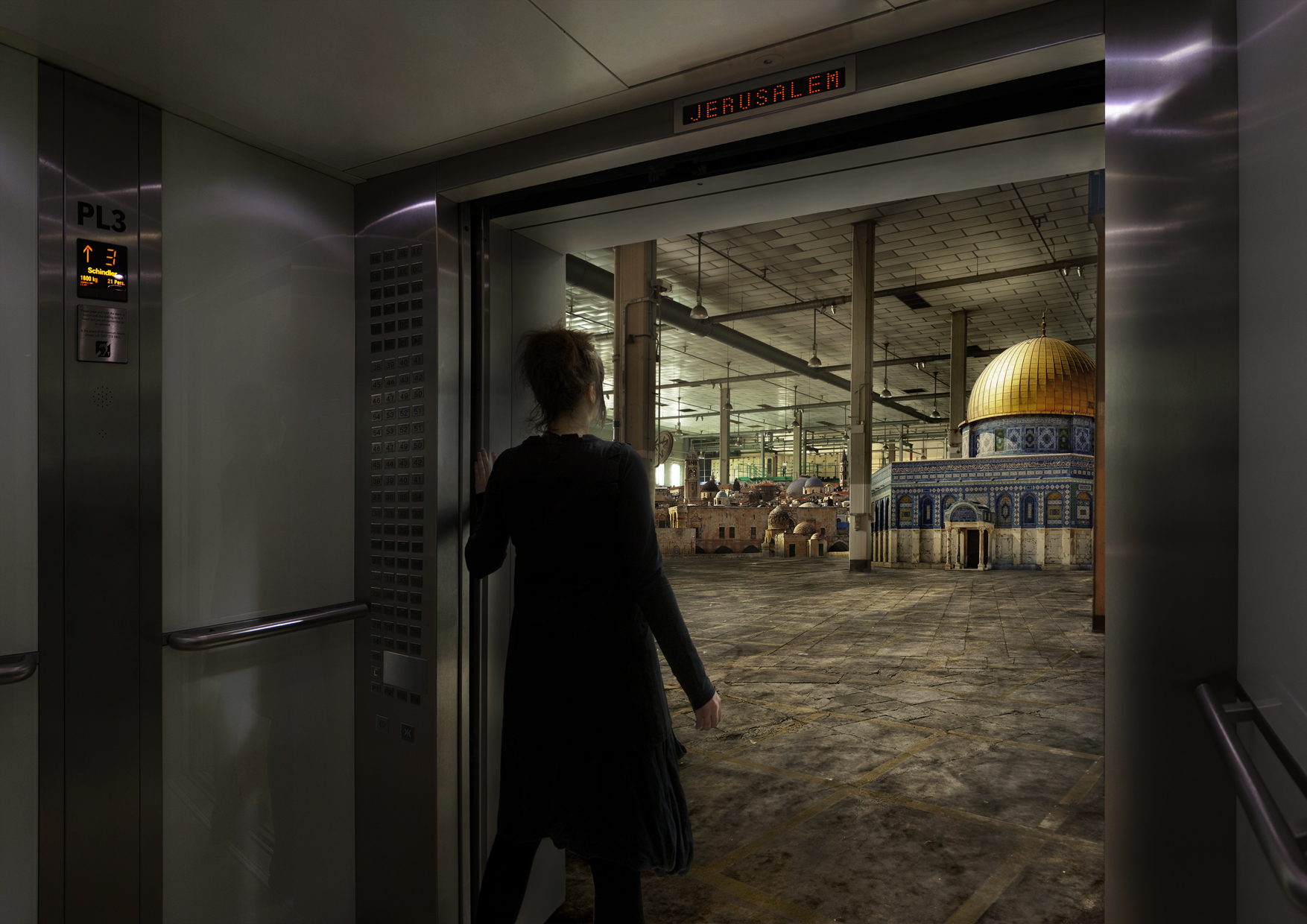
Larissa Sansour, Nation Estate - Jerusalem Floor, 2011
Sansour’s shortlisted work, Nation Estate, is conceived in the wake of the Palestinian bid for UN membership. Nation Estate depicts a science fiction-style Palestinian state in the form of a single skyscraper housing the entire Palestinian population. Inside this new Nation Estate, the residents have recreated their lost cities on separate floors: Jerusalem on 3, Ramallah on 4, Sansour’s own hometown of Bethlehem on 5, etc.
The artist explains: “Last week the director of the museum calls me and says that unfortunately a high ranking someone at Lacoste (nobody knows his name) demanded that I be taken off the list of nominees. The strange thing is that Lacoste was in on the selection process from the very beginning, so they were fully aware of my work when they nominated me. What seems to have struck them is the content of this new work which is inspired by the Palestinian bid for official status at the United Nations. That appears to have been too controversial for Lacoste.”

Larissa Sansour, Nation Estate - Olive Tree, 2011
Regretting Lacoste’s decision to censor Sansour’s work, Musée de l’Elysée has offered to exhibit the Nation Estate project outside of the confines of the Lacoste sponsorship. Musée de l’Elysée is based in Lausanne, Switzerland. The Lacoste Elysée Prize 2011 is the award’s second edition.
Søren Lind, Sansour’s assistant, declared Tuesday(20th Decemeber) that Lacoste had yet to give any public response on the matter. Spokespersons for the Musée de l’Elysée were contacted, but no statement was forthcoming.
The Musée de l’Elysée has also decided to suspend the organisation of the Lacoste Elysée Prize 2011 and made the artist an official offer for an exhibition: “We reaffirm our support to Larissa Sansour for the artistic quality of her work and her dedication. The Musée de l’Elysée has already proposed to her to present at the museum the series of photographs “Nation Estate”, which she submitted in the framework of the contest.” – Sam Stourdzé, Director of the Musée de l’Elysée
Open Statements Regarding The VBKÖ
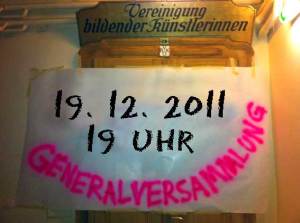
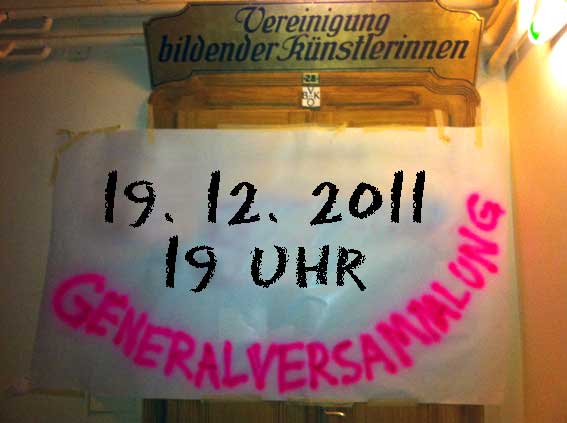
- General Assembly, December 19, 2011, 19:00
Statement of the VBKÖ (Austrian Association Of Women Artists) leadership in response to demands from members and former members of the organization for fairer governance, formulated in the Open Statement To The President Of The VBKÖ.
__________________________
To the initiators! To the audience!
In the following, the Board of the Austrian Association of Women Artists (VBKÖ) is commenting on the e-mail of November 25, 2011, titled “Urgent convocation of a General Assembly” , and of November 30, titled “Open Statement to the President of VBKÖ”.
We sharply reject the false reports and attacks on the incumbent President of VBKÖ, Rudolfine Lackner, launched by the artists Elke Auer, Veronika Dirnhofer, Lina Dokuzovic, Hilde Fuchs, Nina Höchtl, Esther Straganz, Angela Wiedermann, Julia Wieger, which have been in circulation for days and also been made public now!
Only a fraction of the initiators are still holding a membership of VBKÖ at all. The others resigned their membership under diffuse pretexts in the course of the General Assembly on June 27, 2011. Since in the last years and months, the participation of all these artists in the actual work of the Association was very little, their sky-rocketing and globally manifested interest in VBKÖ within a week´s time is amounting to surprise.
With reference to the publicized list of demands the Board is replying that the initiators could long have put these into practice, which they had been invited to, being members of VBKÖ. For a long time, it would have been possible to elaborate concepts and to discuss them. In our opinion, the initiators, instead, are acting grossly negligently under the cloak of a democratic approach: An international smear campaign was launched against Rudolfine Lackner. The Federal Ministry of Education, Arts and Culture was contacted, the chief grant-giving authority in Austria. This being so, Austria´s first association of women artists in history (est. in Vienna, in 1910), as women-minded and feminist counterpart to the Viennese Secession and the Künstlerhaus, is at risk to get withdrawn every funding basis, and the successful organizational work of many years, to be destroyed all at once. This way, the precious historic rooms in Vienna´s city, which have been defended for years in seemingly never-ending legal proceedings – among others, there was an additional claim for the rent of € 1.6 million – are in danger of getting played into the hands of the real opponents we have in common, the property speculators.
Democratic rights of codetermination, processes of decision-making and communication, information, accessibility and transparency have not only never been restricted, but they have also hardly been made use of by the initiators at all. At the last General Assembly on October 10, 2011, the articles of the Association where modified, among other things, to increase the chances of becoming a member of VBKÖ. The fact that Rudolfine Lackner has never opposed the “decentralization of power” is already demonstrated by the circumstance alone that Rudolfine Lackner offered her office for discussion and placed it at the disposition of two of the signers earlier this year.
The present explosive mobilization by the initiating artists is opposed to the continuous organizational work of over 10 years. Measures have been and still are aimed at positioning VBKÖ – which had gone completely unnoticed by the expert world until a few years ago –, countering one-sided conceptions of (art) history by rediscussing its own history, making its archives available to the public, fighting for the cause that this organization of significance in terms of cultural policy and cultural history should remain in the historic premises, advocating a clearly improved situation when it comes to grants (which could stabilize the frail structures of VBKÖ), and in addition to that, facilitating a critical contemporary art program with the smallest budget means.
We are favouring the next General Assembly to take place on December 19, 2011, 7pm, at VBKÖ.
Sincerely yours,
Rudolfine Lackner, Präsidentin der/President of VBKÖ
Cilgia Caratsch, Schriftführerin der/Secretary of VBKÖ
Barbara Karahan, Mitglied der/Member of VBKÖ
_____________________________________
Open Reply To The Statement Of The VBKÖ
The signatories of the demand for a general assembly welcome the opportunity for a general assembly on the 19th of December at 7pm.
From the moment that the membership program was launched in 2010, the organization’s anniversary year, we were exuberant about this opportunity – particularly on the occasion of the centennial celebration – to take part in opening a space and program which had historically been repressed and closed for decades. We were happy to join the president in what was presented as such an opportunity.
As the opening up of a historically repressed space was part of the mutual agenda, a growing frustration began to spread when a general lack of communication and transparency only increased following the inauguration of the centennial program and the membership program. For these reasons, and the reasons mentioned in the demand for a general assembly, it became pertinent that the space be opened to bring a public awareness of the situation taking place – after a general lack of communication, which reached a climax following the silence after the demand for a general assembly.
We thereby applaud the current call for a general assembly as the first step in a democratic process, for the following reasons:
• The “upgrading” or “modification” of member statues by one person without communication to the other members is not a democratic process of their re-articulation
• A decentralization of power does not mean expanding a discussion on the positions within a public institution to include two people rather than one.
• Private invitation of membership, rather than opening the possibility to a broader public of women artists, is not the opening of the institution to new members.
• Access to the statutes should not be a limited affair.
• Being “erased” is an inappropriate way to end a membership term.
• Legal proceedings cannot be supported nor empowered without transparency of their undertakings.
• Only together can we get a broader public and broader funding potential – it is in no one’s interest to decrease or terminate financial or public support of any kind in any way for the VBKÖ, on the contrary.
• The critical perspectives and development of this institution can and have only taken place in plurality.
• Approaching the complex history of the space and its archives can only take place in plurality, but has not thus far.
Thereby, we, the signatories of the demand for a general assembly, and continuing members of the VBKÖ – according to the organizational statutes – look forward to this opportunity for clarifying, opening, strengthening and expanding the important historical institution that is the VBKÖ.
In addition, as a step towards greater transparency, we encourage the attendance of guests at the general assembly.
Elke Auer
Veronika Dirnhofer
Lina Dokuzovic
Hilde Fuchs
Nina Höchtl
Esther Straganz
Angela Wiedermann
Julia Wieger
 ArtLeaks