Updates
ACT NOW! Submit your story to ArtLeaks and end the silence on exploitation and censorship! Please see the submission guidelines in the "Artleak Your Case" page
Submitted and current instances of abuse are in the "Cases" section
To find out more about us and how to contribute to our struggles, please go to the "About ArtLeaks" page
Please consult "Further Reading" for some critical texts that relate to our struggles
For more platforms dedicated to cultural workers' rights please see "Related Causes"
For past and upcoming ArtLeaks presentations and initiatives please go to "Public Actions"
Art Workers’ Self-Defense Initiative: Open Statement Regarding the National Art Museum of Ukraine (NAMU)
via Art Workers’ Self-Defense Initiative and Larissa Babij
The National Art Museum of Ukraine (NAMU) is in crisis. Very soon, the Minister of Culture Mykhailo Kulyniak is supposed to announce his decision whether to entrust the Museum Council of the Ministry of Culture with recommending a candidate to fill the position of General Director of NAMU or to appoint Tatiana Mironova, who over six months as Acting Director has proved herself (both within and outside the Museum’s walls) incompetent to head Ukraine’s leading art museum.
In early April 2012, Mironova was chosen to temporarily replace long-time NAMU Director Anatoliy Melnyk, who was removed from his position as part of the Ministry of Culture’s sweeping program of museum “modernization.” Since then, she has provoked strong criticism from members of the museum staff and from the Ukrainian art community at large.
Concurrently with Mironova’s appointment as Acting Director, an open competition was announced to fill the position of General Director. Legally, the decision of the committee responsible for choosing the best candidate serves as a recommendation; the ultimate appointment is made by the Minister of Culture. The competition was prolonged for months, and only after the frustration of the museum staff turned into public discussion did the Ministry of Culture set a final date for convening the committee to make a decision – October 12. The votes were split between two candidates – Mironova and Yuliya Lytvynets, current Chief Curator and 11-year veteran of NAMU. Afterward, the committee submitted a request to the Minister to entrust the Museum Council, a body composed of museum professionals from all over Ukraine, to decide which candidate to recommend.
Meanwhile, hundreds of art professionals and members of the Museum’s public signed letters calling for transparency in the process of selecting the new museum director. Official recommendations were made by the Public Council of the Ministry of Culture to publicize the programs of the candidates, to make public the minutes of the meeting of the selection committee, and to hold a public discussion with the candidates. A group of concerned citizens – members of the Ukrainian art community and the Museum’s public – have organized a few public gatherings to discuss the fate of the Museum and circulated letters of support for the institution, calling on the Minister of Culture to appoint a new director with the necessary qualifications – experience working in a museum and familiarity with the specific conditions of NAMU.
The Minister of Culture has been silent since Friday, October 12.
On October 16, members of the Museum staff published an open letter addressed to the Minister of Culture, in which they refute a number of slanderous remarks and false claims published by Mironova in a recent blog post (http://blogs.korrespondent.net/celebrities/blog/mironovagallery/a80784). They write, “Given [Mironova’s] glaring incompetence and unsubstantiated allegations, providing of false information, appropriation of the Museum’s past achievements, the team of the National Art Museum of Ukraine demands the immediate dismissal of Ms. Mironova from the post of Acting Director of NAMU and barring her from being appointed director of NAMU” (http://www.museum-ukraine.org.ua/index.php?go=News&in=view&id=7634). The following day, the museum workers began an open protest, calling for Mironova’s immediate dismissal on a sign posted in the museum’s entry hall.
If the Minister of Culture of Ukraine single-handedly appoints Mironova Director of NAMU, ignoring the demands of the Museum staff and greater art community, this will not only bring to a halt the process of intellectual-cultural development spearheaded by the Museum staff over the past few years and herald in a new era of commercialization at the cost of art and integrity; it will also serve as a shining example of the compromising, glamorized, degraded face of Ukrainian culture today.
A group of concerned citizens – members of the Ukrainian art community and the Museum’s public – have circulated a letter of support for the institution, calling on the Minister of Culture to appoint a new director with the necessary qualifications – experience working in a museum and familiarity with the specific conditions of NAMU.
English: http://www.petitions24.com/support_for_the_national_art_museum_of_ukraine
Ukrainian: http://www.petitions247.net/support_namu
For more information about the situation around the National Art Museum of Ukraine, please see http://istmkyiv.wordpress.com and https://art-leaks.org/2012/10/17/art-workers-self-defense-initiative-open-statement-regarding-the-national-art-museum-of-ukraine-namu/
Please also see this piece by Mykola Ridnyi, “Ukrainian Museums – Between Two Evils.”
UPDATE via ARTMargins
On Friday, November 16, the Minister of Culture of Ukraine appointed Maria Zadorozhna the new director of the National Art Museum. In an unprecedented gesture, the Minister, who has sole legal power to make such appointments, took into account the demands of the museum staff and greater art community to choose a candidate with adequate professional qualifications. After a month of escalating protest (in the form of petitions and frequent public actions) against acting director Tatiana Mironova, the Minister promised to not make his decision single-handedly and called a meeting of the Museum Council of the Ministry of Culture (an advisory body composed of museum professionals from all over the country) to recommend a candidate for the position. Mironova, the owner of a commercially successful contemporary art gallery with no museum experience and wife of a prominent local politician, replaced former director Anatoliy Melnyk in April, after he was scandalously dismissed under the premises of the Ministry of Culture’s museum modernization policy. Zadorozhna, who was the National Art Museum’s Deputy Director of Development for 10 years and involved in the Museum’s innovative recent projects, was one of two candidates recommended by the Museum Council.
Ukrainian Museums: Between Two Evils
Please scroll down for Russian
// EN
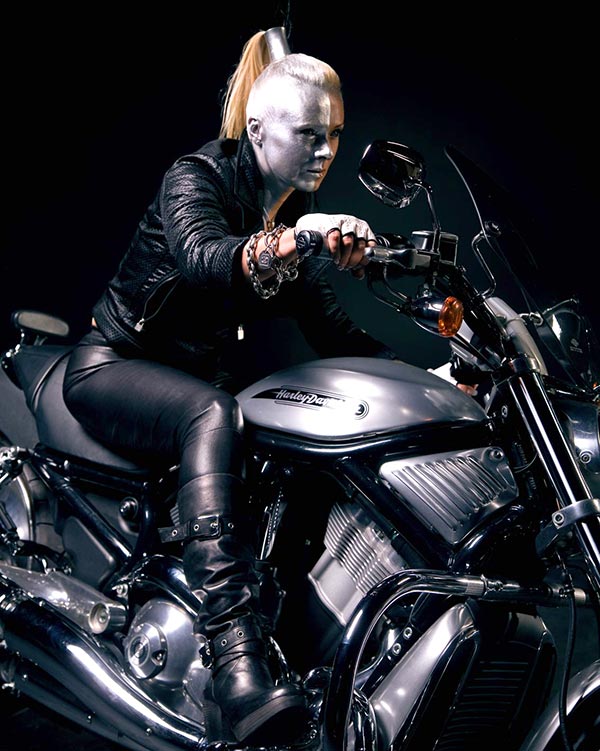
Tatiana Mironova
At the moment a bureaucratic battle is being waged for the post of Director of the National Art Museum Ukraine (NAMU) in Kiev. The results will be announced very soon. So far, one of the main contenders for the post is interim director Tatiana Mironova, who has already been in charge for half a year. However, her running for Director is extremely problematic as Mironova is both an art dealer and the owner of the commercial gallery “Mironova” in Kiev. Despite this obvious conflict of professional interests, she was not prevented to occupy her current office. The National Art Museum is an important institution in the cultural landscape of Kiev. The exhibitions that have been implemented here in recent years, such as “The Ukrainian New Wave,” “Big Surprise,” “Beuys. Paik. Vostell. Actionism and Video-art 1960-1970,” have demonstrated the powerful relevance of NAMU’s activities as well as its crucial influence on the contemporary Ukrainian cultural context. This is the first institution in Ukraine that has overcome the mental barrier of the post-Soviet museum-archive, becoming an active support for research and experimental projects of contemporary art. And yet, the acting director defined this institution’s mission as follows: “The Museum should become a brand,” thus bringing contemporary art into the sphere of commercial brands. For example, the recent Pego cars which have come to decorate the entrance to the museum in exchange for the company sponsoring exhibitions.
Part of the local art community, outraged by the dire future prospects of the institution began to organize a series of meetings, discussions and initiated a petition letter to the Ministry of Culture, in order to draw attention to the aforementioned issues and organize a legitimate competition for the post of museum director. (documentation of these activities can be consulted on the web site of Art Workers’ Self-defense Initiative. Unfortunately, however, one cannot speak of the art community in Ukraine as a united body of people. There are quite a few followers of neo-liberaliberalism typified by Mironova. The response of Vogue Ukraine, who expressed support for Mironova is symptomatic of this: “The case of Tatyana Mironova is similar with that of Diane Ryland from the Metropolitan Museum (NYC). A bureaucrat once asked her whether she had proper education, meaning museum training. Ryland simply replied: “I do not have such an education, but I was able to bring people to the museum.”
Such signs of neo-liberalism in contemporary Ukraine are only one of the evils that plague its culture today. The other has deep roots in conservatism and Soviet bureaucracy. Here it is important to recall the case of the exhibition “The New History,” curated by the SOSka group in the Kharkiv Art Museum in 2009. The project was conceived as an intervention of contemporary art in the traditional museum exhibition space (the bulk of the museum’s collection consists of painting, graphic and sculpture from Russia and Ukraine spanning from the 16th to the 20th centuries. The goal of the exhibition was to create an open space for dialogue between different cultural layers, while avoiding pitting classical against contemporary art. But the idea of communication proposed by the exhibition soon turned into a veritable scandal – which resulted in the exhibition being closed, a decision taken solely by the director of the museum, Valentina Myzgina.
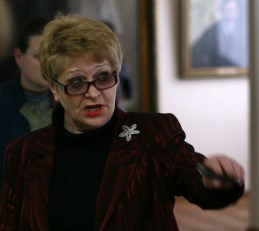
Valentina Myzgina
Not only that, but one of the installations in the exhibit by artist David Ter-Oganyan was destroyed by Myzgina in an emotional outburst of rage. After this, the exhibition organizers spent several hours taking down a great deal of technical equipment and installations which had taken several days to put up. It should also be noted that the museum had another scandalous affair in the recent past – in 1995 Boris Mikahailov’s exhibition was similarly censored. It is striking that the last 15 years of societal transformations have not really affected the state cultural machine. On the contrary, the director of the Kharkiv museum was awarded a prize from President Yushchenko for “outstanding work.” In an official letter explaining the reasons for the closure of “The New History,” Muzgina wrote: “If this Kharkov project is considered the best in Ukraine, then I weep for our culture – this is but an aggressive new wave, financially backed, which is ready to sweep over the cultural achievements of the past. This shocking travesty was stopped in this museum.”
“Instead of an excursion” – video by SOSka group based on documentation of the banned exhibition “The New History” at the Kharkov Museum of Art.
Just a few years later, at the beginning of this year, similar arguments were used by Serhyi Kvit, the rector of Kiev-Mohyla Academy to censor the exhibition “Ukrainian Body,” and ultimately close down the Visual Culture Research Center in Kiev. By commenting “This is not an exhibition – it is shit” Kvit cited the First Secretary of the Communist Party of the Soviet Union, Nikita Khrushchev. This case brought the attention of the international community and several protests, including the action Occupy Ukrainian Body stood as a reaction against the violent censorship.
Curator Viktor Misiano once commented on the “New History” case: “This conflict was not resolved, it will long remain as a haunting illness. The decision to close the exhibition and to throw artists out the door is in itself an odious act, no matter how good the reasons may have been – it resonates deeply with our common recent past, which should be overcome.” This reflection could also be applied to the case of the exhibition “Ukrainian Body” and other similar cases. In Ukraine, these types of cases have unfortunately become a deplorable trend. Ukrainian cultural institutions are currently caught between two evils, aptly symbolized by Myzgina and Mironova– between the “fight against immorality” and car-advertisements inside art exhibitions, between cherished conservatism and festive glamour.
Mykola Ridnyi/ artist and curator, SOSka Group
Editor’s Note. This translation has been slightly edited for republication here. The original article in Russian is published below.
// RU
Украинские музеи: между двух зол
Сегодня идёт бюрократическая борьба за пост директора Национального художественного музея в Киеве, результат которой станет известным в ближайшее время. Пока что, основной претендент на должность — уже пол-года исполняющая обязанности директора Татьяна Миронова. Скандал вызвало то, что Миронова одновременно является арт-дилером и владельцем коммерческой Mironova gallery в Киеве. Однако, такой очевидный конфликт профессиональных интересов не помешал ей появиться в музейной должности. Национальный музей является важным организмом в культурной среде: проекты, реализованные в последние годы, среди которых “Украинская новая волна”, “Большая неожиданность”, “Бойс. Пайк. Фостель. Искусство акции и видео-арт 1960-х – 1970-х годов” и другие – демонстрировали актуальность выставочной деятельности НХМУ и активно влияли на современный украинский культурный контекст. Именно эта институция стала первой в Украине, преодолевшей ментальный барьер пост-советского музея-архива, принявшей и ставшей активно поддерживать исследовательские и экспериментальные проекты современного искусства. Новая исполняющая обязанности директора декламирует свою цель так: «музей должен стать брендом», хотя на её практике это приносит в пространство искусства торговые бренды. Как например, автомобили Pego, недавно украсившие вход музея в обмен на спонсорство выставки.
Часть художественной общественности, возмущённая одиозной ситуации относительно будущего институции организовала несколько встреч-обсуждений, составила петицию и письмо в Министерство культуры, с целью обратить внимание на проблему и организовать легитимный конкурс (с документацией этой активности можно ознакомиться на сайте Инициативы Самозащиты Трудящихся Искусства: http://istmkyiv.wordpress.com/). Однако, к сожалению, в Украине нельзя говорить о художественном сообществе как о едином организме. У неолиберальной модели, типичным последователем которой является Миронова, достаточно активных адептов. Симптоматично, что реплику поддержки высказала главред украинского Vogue: “С Дианой Риланд в музее Метрополитан произошла точь-в-точь такая же история, как с Татьяной Мироновой. Некий бюрократ спросил ее, есть ли у нее образование, подразумевая музейную подготовку. Риланд ответила просто: «У меня нет никакого образования, зато я привела в музей людей».
Признаки неолиберализма в современной Украине являются одним полюсом зла. Но существует и другой, пускающий корни в консерватизм и советскую бюрократию. Здесь следует вспомнить случай выставки «Новая история», курируемой группой SOSка в Харьковском художественном музее в 2009 году. Проект был задуман как интервенция современного искусства в экспозицию традиционного музея (хронологические рамки музейной коллекции живописных, графических и скульптурных работ русского и украинского искусства охватывают период XVI – начала XX веков). Избегая приёма противопоставления классического и актуального искусства, целью было – создание открытого диалога различных культурных пластов. Но коммуникативные идеи «Новой истории» в ходе реализации обернулись скандалом — выставка была закрыта единоличным решением директора музея Валентиной Мызгиной. При этом одна из работ выставки, инсталляция Давида Тер-Оганьяна, была уничтожена директором собственноручно в состоянии эмоционального аффекта. Кураторам и участникам выставки пришлось за несколько часов вывести с территории музея огромное количество техники и выставочного оборудования, монтаж которого занял несколько дней. Следует отметить, что Харьковский музей имеет скандальный опыт работы с современным искусством – решением этого же директора здесь была запрещена выставка Бориса Михайлова в 1995 году. Поразительно то, что за 15 лет преобразований общества никак не коснулись отдельных функционеров государственной культурной машины, директор даже была награждена медалью от президента Ющенко как выдающийся музейный работник. В официальном письме, поясняющем мотивы закрытия «Новой истории», Мызгина написала следующее: «…если этот харьковский проект признано лучшим в Украине, то бедная наша культура! — агрессивное шествие наших амбициозных манкуртов — актуалистов, поддержанное финансово, готово смести на своём пути культурные достижения прошлого. В музее это шокирующее издевательство было остановлено».
Сходной аргументацией пользовался Сергей Квит, ректор Киево-Могилянской академии, несколько лет спустя, запретивший выставку «Украинское тело» и закрывший площадку Центра Визуальной Культуры в Киеве. На его реплику «Это не выставка — это говно», цитирующую Первого секретаря коммунистической партии СССР Никиты Хрущёва, обратили внимание в международном художественном контексте после всемирной акции Occupy Ukrainian body и других акций протеста. Реплика куратора Виктора Мизиано о случае «Новой истории»: «этот конфликт не разрешится сейчас, он еще долго будет напоминать о себе фантомной болью. Решение закрыть выставку, выставив художников за дверь, какими бы вескими причинами он не мотивировался – факт одиозный, резонирующий с тем нашим общим прошлым, которое хочется счесть преодоленным», вполне могла бы касаться и выставки «Украинское тело» и другого подобного случая. В Украине, к сожалению, речь идёт о плачевной тенденции.
Украинские публичные институции оказались между двух зол, условными символами которых являются Мызгина и Миронова (http://korydor.in.ua/texts/1064-set-svyaze-nad-granitsami) – между “борьбой с развратом” и рекламными стендами с автомобилями на художественных выставках, между охранительным консерватизмом и праздником гламура.
Николай Ридный \SOSka Group
ArtLeaks Public Discussion at the 9th Annual Historical Materialism Conference, London, November 7th, 2012
ArtLeaks invites you to a public discussion with the occasion of the 9th Historical Materialism conference, “Weighs Like a Nightmare” in Central London. Our event will take place on Wednesday, November 7th from 7 -10 PM in the Khalili Lecture Theatre at SOAS (the School of Oriental and African Studies), University of London. More information in the announcement below. Please help us spread the word!
Presentation of the international platform ArtLeaks and on the urgency of launching the ArtLeaks Gazette
Part of the 9th Annual Historical Materialism Conference ‘Weighs Like a Nightmare’, London, November 7th-12th, 2012
Khalili Lecture Theatre
SOAS, University of London (the School of Oriental and African Studies)
7th of November 2012
ArtLeaks is an international platform for cultural workers where instances of abuse, corruption and exploitation are exposed and submitted for public inquiry. ArtLeaks stresses the urgent need to seriously revise these workers’ relationship with institutions, networks and economies involved with the production and consumption of art and culture. The goal of ArtLeaks is to create a space where one could engage directly with actual conditions of cultural work internationally – conditions that affect those working in cultural production as well as those from traditionally creative fields. Furthermore, ArtLeaks is developing in the direction of creating transversal alliances between local activist and cultural workers groups, through which we may collectively tackle situation of repression and inequality.
While building on previous models that emerged in the highly politicized milieus of the 1970s and 1980s, such as the institutional critique practice of left-wing collectives like Art Workers’ Coalition(AWC), The Guerrilla Art Action Group (GAAG), Art & Language, Political Art Documentation/ Distribution (PAD/D), Group Material to name just a few, ArtLeaks seeks to expand the scope of these historical precedents towards international geo-political engagement. One of the outcome of ArtLeaks working assemblies and workshops was the establishment of alliances with international groups such as: W.A.G.E.(NYC), Occupy Museums (NYC), Arts & Labor (NYC), Haben und Brauchen (Berlin), the Precarious Workers Brigade (London), Carrotworkers’ Collective (London), Critical Practice (London), The May Congress of Creative Workers(Moscow). It is our strong belief is that only an internationally coordinated movement would be able to expose and denounce exploitation and censorship in contemporary culture, and collectively imagine new types of organizational articulations which would respond to the needs and desires of political subjects constituted at the crossing points of the current economic, politic and cultural shifts.
For the 2012 Historical Materialism Conference, members of ArtLeaks will present the outcome of their previous working assemblies which took place this year in Berlin, Moscow and Belgrade and bring up for discussion the urgent need to establish ArtLeaks Gazette (forthcoming 2013). This regular, on-line publication aims to be a tool for empowerment in the face of the systemic abuse of cultural workers’ basic labor rights, repression or even blatant censorship, and the growing corporatization of culture that we face today.
Facilitators: Corina L. Apostol & Vlad Morariu with Vladan Jeremić & Dmitry Vilensky (in heart and mind)
More about the ArtLeaks Gazette: https://art-leaks.org/artleaks-gazette/
More about Historical Materialism : http://www.historicalmaterialism.org/about-us
ArtLeaks members participated in Truth is Concrete, a 24/7 marathon camp on artistic strategies in politics and political strategies in art, a project by steirischer herbst in Graz, Austria from September 21 – 28, 2012. On September 22nd, we gave a presentation of our activities on the panel “Art and crime. Legally on the edge,” hosted by curator Joanna Warsza. Corina L. Apostol, Valentina Desideri, Vladan Jeremic, Vlad Morariu and Dmitry Vilensky participated in this panel, giving an overview of the urgency that brought ArtLeaks into being, its goals and presented a couple of concrete cases that were published in the year since the platform was launched. We also underlined some useful resources which we made available for the community, such as a Further Reading section which we update regularly with critical texts that relate to our struggle and the No Fee Statement (initiated by the Bureau of Melodramatic Research and Paradis Garaj) through which we encourage cultural workers to use in order to make visible corporate and publicly funded institutions’ inequitable compensation of their workforce. We also reported on the outcomes of our previous three working assemblies in Berlin, Moscow and Belgrade this year and introduced our forthcoming ArtLeaks Gazette.
During our stay in Graz, ArtLeaks members met together with representatives of international platforms who share some of our concerns – among these: Carrotworkers’ Collective, Critical Practice, Free/ Slow University Warsaw, Haben und Brauchen, Minor Compositions, Precarious Workers’ Brigade (PWB), W.A.G.E. (Working Artists and the Greater Economy). For us this was a great opportunity to brainstorm with these groups, with the intention of working together more closely in the near future. Among the most important topics we discussed were: the possibility of building together on a common tool box, which can be customized according to working conditions in local contexts; building an enlarged mailing list of supporters from different countries and different precarious workers’ associations, so that moments of whistle-blowing could be transformed into moments of mobilization, open debate and protest; setting up a regular exchange of information on the organizing tools we develop, sharing the analyses we produce individually and collectively around culture, work, precarity and announcing initiatives and campaigns. Currently, we are using the connections which were established in Graz as a way to find our what concrete problems each of us is confronted with in their context/country and how we are trying to organize in order to respond to them. Based on the overlaps between our efforts, our aim is to see through to an international effort that goes beyond general precarity of cultural workers.
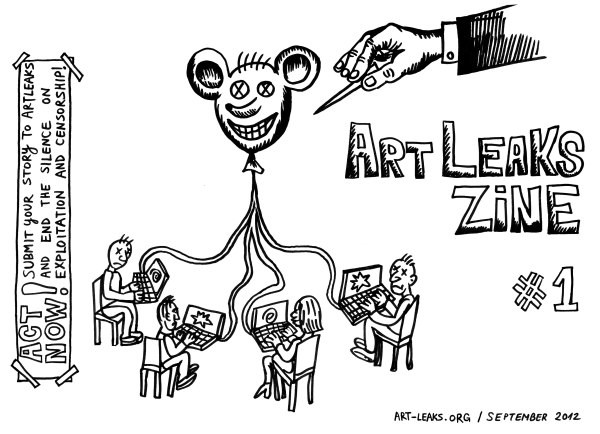
Also with the occasion of Truth is Concrete, Corina L. Apostol, Vladan Jeremić & Rena Rädle put together The ArtLeaks Zine #1, which highlights some of our most significant activities in the past year and includes our ArtLeaks Gazette Call for Papers. Graphics for this zine were produced by Zampa di Leone.
You are welcome to download, print and disseminate our zine here (the cover) and here (the body). The ArtLeaks Zine #1 is distributed under the Creative Commons attribution noncommercial-share alike 3.0
Many thanks to the team of Truth is Concrete for hosting us in Graz and to all our friends, comrades and colleagues who made our stay memorable!
Why organizers moved artworks from the Riga 2012 Quadrennial
via MixNews (Latvia)
With the occasion of the International Sculpture Quadrennial “Riga 2012: Anatomy of Integration,” newly commissioned art-objects were supposed to be installed on October 5th around the Freedom Monument and the Victory Monument in the city. However, these new works were never exhibited at those sites.
The Quadrennial takes place every 4 years and has already a 40-year long tradition in the city, since the Soviet era, when the three Baltic Republics decided to coordinate their artistic efforts. Since then, the Painting Quadrennial has been taking place in Vilnius, Graphics in Tallinn and Sculpture in Latvia. For the 2012 Riga edition, 32 artists and sculptors from 15 countries were invited. All the participants are renowned not only in their home countries but also around the world, having been exhibited at the Venice Biennale, the Biennale of San Paulo and other major international art events.
“We invited socially engaged artists, those who respond to the current state of affairs – that is, the very complex global situation in Europe and the around the world. The artists whose works are represented in this Quadrennial strive to explore interactions between different cultures in the recent past, the present and indeed the future. They are convinced that the time has come to actively discuss the preservation of national identity, culture and language, as well as to integrate into the larger European family and also globally” – declared Inese Barahovka, one of the curators of the Quadrennial “Riga 2012: Anatomy of Integration.”
This year’s Quadrennial is devoted to the the analysis and determination of the current interrelationship between various cultural zones. This theme is topical in a lot of countries in the region on a socio-economic level. This is a positive provocation, which the organizers imagined would lead to reflection, discussions and the development of a progressive democratic society.
At the same time, the organizers complained about strict censorship, blaming Riga’s City Council for imposing a ban on critical art. They claimed that three special installations for the Quadrennial were censored and could not be shown in their original locations. Why exactly did this happen? Sculptor and co-curator of Riga 2012: Anatomy of Integration, Aigars Bikše thinks that the City Council went to great lengths to protect its citizens from so-called “ambiguous” art objects, which may be disturbing for some viewers. Bikše also noted that such measures reveal how the City Council handles people who are unable to think abstractly, referring to those who do not understand critical art objects and overwhelm their officials with complaints.

Stefanos Tsivopoulos, The Stage (For Political Integration)
What is it that is so controversial about these art-objects? Polish sculptor Hubert Czerepok’s fluorescent installation entitled “Everything is Darkness,” combines the form of a Star of David with that of a comet. In his work “The Stage (For Political Integration), artist Stefanos Tsivopulous from the Netherlands comments on the recent re-election of Russian president Vladimir Putin.

Hubert Czerepok, Everything is darkness
Latvian sculptor Ginters Krumholcs was supposed to participate at Riga with a sculpture representing soldiers in black armor standing on a black sphere. Entitled “The Name of the Rose,” this banned work symbolizes, according to the artist, “dark figures,” radicals who use acute “national issues” to exacerbate social problems and increase social divisions in Latvian society. He also explained that the “black sphere” is supposed to represent the confusion, aggression and even hostility between citizens. Last year, Krumholcs was nominated for the famous “Purvitis Award,” however this did not prevent his work from being censored in Riga this year.
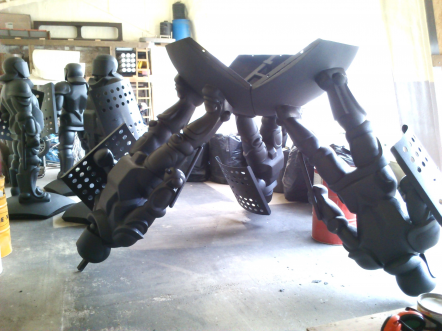
Ginters Krumholcs, In the name of the rose
It seems that the theme of the Quadrennial – integration, around which so many harsh disputes are being waged today, is not welcome by the city’s authorities. And the Star of David placed next to the Freedom Monument is totally unacceptable.
Given the fact that the organizers were prevented from installing several works of art in the locations where they were intended to stand, they moved these to the Latvian Railway History Museum. Here they can be viewed by the general public until November 25th.
This article originally appeared on MIX TV (Latvia) in Russian. This translation has been slightly edited for republication here.
 ArtLeaks