Updates
ACT NOW! Submit your story to ArtLeaks and end the silence on exploitation and censorship! Please see the submission guidelines in the "Artleak Your Case" page
Submitted and current instances of abuse are in the "Cases" section
To find out more about us and how to contribute to our struggles, please go to the "About ArtLeaks" page
Please consult "Further Reading" for some critical texts that relate to our struggles
For more platforms dedicated to cultural workers' rights please see "Related Causes"
For past and upcoming ArtLeaks presentations and initiatives please go to "Public Actions"
On the precarious working conditions of cultural workers in Serbia – Workers’ Inquiry

Bojana Piškur, a member of the Radical Education Collective and curator in Moderna galerija, in Ljubljana, and Djordje Balmazović, a member of the Škart Collective, Belgrade, conducted a joint research investigation Workers’ Inquiry, based on Marx’s Workers’ Inquiry and concerning the position of cultural workers in Serbia. The research took place in Belgrade and Novi Sad in September 2012.
You can download the PDF of the publication from here in English:
http://radical.temp.si/wp-content/uploads/2013/01/Workers-Inquiry_English.pdf
and from here PDF in Serbian:
http://radical.temp.si/wp-content/uploads/2013/01/RADN-ANK-.pdf
Workers’ Inquiry is a 100-question research methodology that can be conducted in different formats, either as oral interviews or written narratives. It also serves as a kind of self-emancipation tool in the spirit of Marx, who said that the emancipation of the workers must come from the workers themselves. The questions range from the educational background, work experience, social and health benefits, participation in trade unions or political parties, to one’s working and living conditions. The aim of the investigation was to show the modes and different levels of exploitation of cultural workers. It is part of a larger project, a team effort to document and analyze the position of cultural workers in Serbia.
Twelve people actively involved in the cultural scene in Serbia were interviewed; curators, artists and activists from the independent and public sectors: Dario Milenković (Alternative Cultural Centre Niš and ACO (Alternative Cultural Organization) Novi Sad), Marko Miletić (Kontekst Collective), Nebojša Milikić (Cultural Centre REX), Radmila Krstajić (b. Joksimović) (independent curator), Aleksandra Sekulić (Center for Cultural Decontamination), Jelena Vesić (independent curator), Vladan Jeremić (artist, cultural and political worker), Rena Raedle (artist, cultural and educational worker), Zoran Erić (curator, Museum of Contemporary Art, Belgrade), Zoran Pantelić (artist and activist, kuda.org, Novi Sad), Marija Raletić (part-time worker at the Museum of Yugoslav History, Belgrade), Saša Pančić (independent artist).
The research investigation Workers’ Inquiry (Radical Education Collective & Škart) is right now in Graz part of the Kontekst collective attempt to conceptualize and realize the exhibition “Unexpected Encounters” in the frame of Steirischer Herbst 2013 in a collaborative process.
More info you can find here:
http://camera-austria.at/ausstellungen/unexpected-encounters/
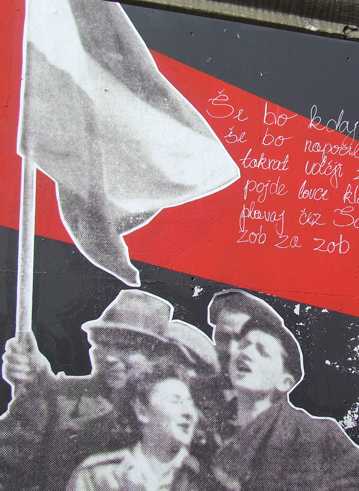 “Unexpected Encounters”, building on questions posed in the 2012 project “Art is Concrete”, focuses on the moment after the uprising: its starting point is the occurrence of and return to a normal state of life following upheaval. The collective desire for normality gives rise to new myths of order, institutions, history and identity. A number of initiatives and groups from various countries that underwent revolutions and political / societal upheaval – in some instances dating back twenty years or more – are invited to collaborate with Camera Austria in creating contributions that reflect and explore these phenomena. How can the indiscernible nuances of these political transformations be transmitted into the realm of cultural spaces without reducing them? How can artistic practice serve as a means of translating the complex political, institutional and social resistances into material forms?
In the scope of the project “Unexpected Encounters” several initiatives / groups / collectives from various geographical locations were invited to discuss these questions and translate them into a presentation in the exhibition space: 0gms from Sofia, Beirut from Cairo, and Kontekst collective from Belgrade. The exhibition title alludes to the idea that even the probing of the respective societal situation itself may initially be marked by misjudgements, inappropriate assumptions, and dubious cultural differences. In a collaborative process, these groups and other artists were invited to explore how these political issues might be transferred into the realm of cultural production without replacing political aspects with cultural ones and thus making them disappear.
Boycott Manifesta 2014 in St. Petersburg?
Dmitry Vilensky on the question of boycotting Manifesta 2014 in St. Petersburg
Read the original boycott petition here: http://www.change.org/petitions/manifesta-the-european-biennial-of-contemporary-art-we-ask-that-manifesta-2014-reconsider-st-petersburg-as-their-next-location
In response to this petition, Manifesta Director Hedwig Fijen stated :
Of course we are concerned about the current conservative climate [in Russia]. But should we isolate all countries that have not yet committed to a just standard of human rights? Or should we not much rather try to build bridges and establish a cultural dialogue? [Read the original here.]
_______________________________________________________
Dmitry Vilensky:
The idea of boycotting an event is always based on radical solidarity. At the same time, this solidarity is seriously limited, as it is always from a negative position and does not really offer an alternative. A boycott generally presents a moralistic assessment of a situation, and it is heavily dependent on a major event against which is it directed. Unfortunately, I cannot think of a moment in art history when a boycott was successful – in a situation of ambivalent cultural politics the event almost always takes places, even if there are a few hundred signatures gathered against it and several important names refuse to participate. However, boycotts are important to my mind, even if they are doomed to failure – as they make the organizers aware of the need to rethink their politics.
For example, for us (the Chto Delat collective) it was important to demand an answer after the disgraceful dismissal of Viktor Misiano from the Moscow Biennale organizers. It was also important to demand an answer from the Kandinsky Prize organizers for rewarding an openly fascist artist. And it was also important to demand that Alain Badiou reject his invitation to Moscow at the invitation of the Gleb Pavlovsky Foundation. And I am very glad that these and other similar interventions have had concrete consequences.
Do we now need to demand a boycott of Manifesta? It’s a rhetorical question – the demand already came and it sounds very compelling, so now we need to analyze who is behind this demand and what the stakes really are.
For me, the real problem is that the boycott comes from the “outside,” in relation to the local players – moreover, as St Petersburg doesn’t actually have an art community that states its position and suggests alternatives. Chto Delat’s position has always been that of grassroots self-organization of the local cultural life, but in our specific case, when all forms of civil society are collapsing, we realize clearly that we lack actual opportunities to formulate a serious counter-power to these “outside” players, with their superficial understanding of what is happening in the city. That is why, speaking from a relatively marginal position within the art scene, I would say that for us calls for a boycott are still premature.
The conversation should be taken to another level of demands (and pressure should be put on all sides). Manifesta should be faithfully trying to fulfill its mission, by finding artistic means of expression that reflect on the collapse of “social dialogue” in Russia, which goes beyond the LGBT community. If this event is willing to take this challenge, then it is worth supporting it and the experience could be important and unique – if it is not ready, then the artistic community still has enough time to take the necessary maneuvers.
Now, however, we see certain warning signs. The counter-petition, written by Manifesta organizers, states that it will strive not to interfere in “internal” politics and instead “engender” a kind of taste (?) for some abstract values of tolerance. Bur what’s that?? Instead of a declaration of solidarity with the LGBT community, with all of those who are persecuted in Russia (from migrants to the members of art collectives sitting in prison), we hear that Manifesta will not participate in any propaganda, instead it will attempt to maintain a neutral space for dialogue. There is no such thing as a neutral space for discussion in Russia today – you are either on the side of the repressive conservative ideology machine, of cheap entertainment and mind-wasting of the creative class, or you are fighting to develop a viable alternative to all of this. In the current situation, forcing a Cold War between “The West” (with its civil society values) and Russia only leads to a psuedo-union through art type of rhetoric – a starry-eyed take, more appropriate as the mission statement of an international charity organization. Real contemporary can and must deal with antagonism and conflict. This is the only position Manifesta can take faced with the problematics of presenting a democratic art project in a situation of legitimizing the power of an archaic escalation of violence on every level of civic and political life. This is truly a radical conflict, and it’s unclear how it could be resolved, but as we have learned from China or the Arab countries, Western cultural machines are always prepared to compromise, retreating behind the rhetoric of respecting “differences,” when in reality they are quite clearly dictated by financial speculation and the obscure idea of fostering “all that is well and good.”
What we are seeing now is that Manifesta is drawn in a compromise with the city officials that finance it, who happily “bought” Manifesta brand for the city, the same bureaucrats who are directly connected to the most outspoken homophobes and religious lobbists in Russian politics today. As we well know as insiders in this situation, these figures have never been willing to support any basic principles of “autonomous” political expression in the arts. It is worth mentioning that in the current Lissitsky – Kabakov exhibition at the Hermitage a painting was taken out because it contained obscenities – if such a direct censorship of a (quite harmless) classic in a leading Russian museum is possible with impunity, we can only imagine how it affects the work of young contemporary artists.
In the production of the Manifesta project in Petersburg there was from the beginning an explosive mixture of the interests of the Manifesta Foundation, the will of the curator (Thanks to Colta.ro for the information about the identity of the curator – Kasper König), the city administration, the yet-unrealized projects of the artists and the Hermitage – all this together with the unpredictable Russian politics create a situation that can explode at any moment, with or without the petition. I also assume that Manifesta is under a lot of pressure not only from the protesters, but also from the organizers in Russia who hardly have any experience working on a contemporary project of this scale (or with contemporary art for that matter). And they will do their best to brand Manifesta with the comfortable slogan “the Olympics of contemporary art.” (the St. Petersburg city administration must have bought this event just to use this slogan) – whether Manifesta will be able to critically engage all of this and how it will manage to do so, will become clear very soon.
And then we will act based on the development of this situation.
_______________________________________________________
Translated from Russian by Corina L. Apostol. Read the original here: http://chtodelat.org/index.php?option=com_content&view=article&id=1086%3A2013-08-24-10-18-19&catid=124%3Anews&lang=en
ArtLeaks Workshops – On Cultural Production, Organization and Struggle (Bucharest, Romania)
@ Zampa di Leone
//EN
ArtLeaks Workshops – On Cultural Production, Organization and Struggle
Part I – History of Struggles and Forms of Organization
tranzit.ro/ Bucureşti, Str. Gazelei nr. 44, sector 4
In these workshops we will analyze how cultural producers have organized in the past and the present to improve not only their living conditions, but also political, social, and economic frames at large. Moreover, we will problematize the classification of cultural activity as labor, test the viability of “cultural producer” or “cultural worker” as a collective marker of subjectivity, and look at culture as a field of but not limited to labor practices that affect society.
The crucial thing is that we make connections between these struggles, while methodologically connecting cultural with political and economic analysis. One of the major themes of these meetings is the historical relationship between art, organized labor and social movements in the age of capitalist globalization, and in order to decipher these structures and the connections between them we will look at a variety of examples of local struggles, alternative models and international networks.
Participants will be encouraged throughout the workshops to imagine their own alternative models, list of demands, manifestos, ways in which artistic labor can be collectivized, new institutional models.
Part I.
10th and 12th of September, from 5 pm – with Corina Lucia Apostol and Vlad Morariu: History of Struggles and Forms of Organization
Throughout the 20th century, artists, art critics, curators, interns etc. have been demanding fair working conditions, struggling over agency and subjectivity in myriad ways and through various ideas about what this entails. Over two sessions we will analyze historical case-studies of self-organization of cultural producers. Our goal is not to produce a synthetic model out of all of these struggles, rather to examine how problems have been articulated at various levels of (political) organization, with attention to the genealogy of the issues and the interaction between hegemonic discourses (of the institution, corporation, the state) and those employed by cultural producers in their respective communities.
Reading list – excerpts from the following texts:
Alexander Alberro and Stimson Blake,eds.: Institutional Critique: An Anthology of Artists’ Writings
Walter Benjamin: The Author as Producer
Luc Boltanski, Eve Chiapello: The New Spirit of Capitalism
Andrew Hemingway: Artists on the Left
Documents from the Art Workers’ Coalition Hearings, 1969
Artists Meeting for Cultural Change, 1977
Political Art Documentation and Distribution: A 1980s Activist Art and Networking Collective
Silvia Federici: Precarious Labor: A feminist viewpoint
Precarias a la deriva: Adrift through the circuits of feminized precarious work
Guerrilla Girls: The Guerilla Girls’ Guide to Behaving Badly (Which You Have to Do Most of the Time in the World as We Know It)
Gerald Raunig & Gene Ray, eds.: Art and contemporary critical practice: reinventing institutional critique
Keti Chukhrov: Towards the Space of the General: On Labor beyond Materiality and Immateriality
Dara Greenwald: Does Corporate Culture STILL Suck?
Hans Abbing: Notes on the Exploitation of Artists
Mostafa Heddaya: When Artspeak Masks Oppression
ArtLeaks is a collective platform initiated by an international group of artists, curators, art historians and intellectuals in response to the abuse of their professional integrity and the open infraction of their labor rights. We initiate and provide the community with online tools – https://art-leaks.org/ and the facebook page “ArtLeaks” – which are open for use by anyone ready to share this or that case.
Corina L Apostol is Ph.D candidate in the Department of Art History at Rutgers University – New Brunswick. She is also a curatorial research fellow of the Norton and Nancy Dodge Collection of Nonconformist Art from the Soviet Union at the Jane Voorhees Zimmerli Art Museum. She is the co-founder of Art Leaks and co-editor of the ArtLeaks Gazette.
Vlad Morariu is a theoretician, curator and art critic based in London. He is educated in philosophy and is currently finishing his PhD research at Loughborough University School of the Arts, writing on the present conditions and possibilities of institutional critique. He translated in Romanian Arthur Danto’s Transfiguration of the Commonplace. A Philosophy of Art (Idea, 2012) and is a collaborator of the Idea Art + Society magazine and co-editor of the ArtLeaks Gazette.
The ArtLeaks workshops will continue during the months of September and October at the space of tranzit.ro/ Bucureşti.
Those wishing to participate are encouraged to register for one or more sessions at the e-mails: raluca.voinea@tranzit.org and corina.lucia.apostol@gmail.com.
All registered participants will receive the reading list excerpts in advance of the workshops.
//RO
Atelierele ArtLeaks – Producție culturală, organizare şi luptă
Partea I. Istorii ale formelor de luptă şi organizare
Atelierele ArtLeaks
Producție culturală, organizare şi luptă
Septembrie & octombrie 2013
tranzit.ro/ Bucureşti, Str. Gazelei nr. 44, sector 4
În cursul acestor ateliere vom analiza diferite modele folosite în trecut şi în prezent de producătorii culturali pentru a se organiza, prin care aceştia încearcă să îmbunătățească nu doar propriile lor condiții de trai, dar şi cadrele sociale, economice şi politice mai largi. Mai mult, vom aduce în discuție clasificarea activității culturale drept muncă, vom testa viabilitatea „producătorilor culturali” sau „muncitorilor culturali” drept indicatori colectivi de subiectivitate şi vom privi cultura ca pe un domeniu care ține de (dar nu se limitează la) practicile lucrative care influențează societatea.
Important este să creăm conexiuni între aceste bătălii, iar metodologic să legăm analiza culturală de cea politică şi economică. Una dintre temele majore ale acestor întâlniri o constituie relația istorică dintre artă, munca organizată şi mişcările sociale în era globalizării capitaliste ; pentru a descifra aceste structuri şi legăturile dintre ele vom analiza o varietate de exemple ale unor lupte locale, modele alternative şi rețele internaționale.
Participanții vor fi încurajați ca în timpul atelierelor să-şi imagineze propriile modele alternative, liste de revendicări, manifeste, feluri în care munca artistică poate fi revendicată colectiv, noi modele instituționale.
Partea I.
10 şi 12 septembrie, de la orele 17:00 – cu Corina Lucia Apostol şi Vlad Morariu: Istorii ale formelor de luptă şi organizare
De-a lungul secolului 20, artişti, critici de artă, curatori, asistenți voluntari, etc. au cerut condiții de muncă mai juste, militând pentru influență şi subiectivitate în nenumărate feluri şi prin diferite idei despre ce ar putea să însemne acestea. Timp de două întâlniri, vom analiza studii de caz istorice de auto-organizare ale producătorilor culturali. Scopul nostru nu este să producem un model sintetic din toate aceste lupte ci mai degrabă să analizăm modul în care problemele au fost articulate la diferite nivele de organizare (politică), acordând atenție genealogiei acestor probleme şi interacțiunii dintre discursurile hegemonice (ale instituției, corporației, statului) şi cei angajați de către producătorii culturali în comunitățile lor.
Listă de lecturi – fragmente din următoarele texte:
Alexander Alberro and Stimson Blake,eds.: Institutional Critique: An Anthology of Artists’ Writings
Walter Benjamin: The Author as Producer
Luc Boltanski, Eve Chiapello: The New Spirit of Capitalism
Andrew Hemingway: Artists on the Left
Documents from the Art Workers’ Coalition Hearings, 1969
Artists Meeting for Cultural Change, 1977
Political Art Documentation and Distribution: A 1980s Activist Art and Networking Collective
Silvia Federici: Precarious Labor: A feminist viewpoint
Precarias a la deriva: Adrift through the circuits of feminized precarious work
Guerrilla Girls: The Guerilla Girls’ Guide to Behaving Badly (Which You Have to Do Most of the Time in the World as We Know It)
Gerald Raunig & Gene Ray, eds.: Art and contemporary critical practice: reinventing institutional critique
Keti Chukhrov: Towards the Space of the General: On Labor beyond Materiality and Immateriality
Dara Greenwald: Does Corporate Culture STILL Suck?
Hans Abbing: Notes on the Exploitation of Artists
Mostafa Heddaya: When Artspeak Masks Oppression
ArtLeaks este o platformă colectivă inițiată de un grup internațional de artişti, curatori, istorici de artă şi intelectuali ca răspuns la abuzurile asupra integrității lor profesionale şi încălcarea drepturilor lor de muncă. Oferim comunității platformele online https://art-leaks.org/ şi pagina de facebook “ArtLeaks”, care sunt deschise oricui este pregătit să împărtăşească un caz sau altul.
Corina L Apostol este doctorandă în cadrul Departamentului de Istoria Artei la Universitatea Rutgers – New Brunswick. Are de asemenea o bursă de cercetare curatorială în cadrul Colecției Norton şi Nancy Dodge de Artă Nonconformistă din Uniunea Sovietică la Jane Voorhees Zimmerli Art Museum. Este co-fondatoare a ArtLeaks şi co-editoare a ArtLeaks Gazette.
Vlad Morariu este teoretician, curator şi critic de artă, stabilit la Londra. A studiat filosofia şi în prezent îşi încheie cercetarea de doctorat la Loughborough University School of the Arts, cu o teză despre condițiile şi posibilitățile prezente ale criticii instituționale. A tradus în română Transfigurarea locului comun. O filosofie a artei, a lui Arthur Danto (IDEA, 2012) şi este colaborator al revistei IDEA Artă + societate şi co-editor al ArtLeaks Gazette.
Atelierele ArtLeaks vor continua în septembrie şi octombrie la spațiul tranzit.ro/ Bucureşti. Cei care doresc să participe sunt încurajați să se înscrie pentru una sau mai multe întâlniri, scriind la adresele de email : raluca.voinea@tranzit.org şi corina.lucia.apostol@gmail.com. Toți participanții înscrişi vor primi fragmentele de texte din lista de lecturi în pregătirea atelierelor.
via Ahmet Ögüt
I never performed for the media. I tried to reach people. It was not acting. It was not some media muppet show. That is a cynical interpration of history. *
Abbie Hoffman* After his act at New York Stock Exchange, hurling/throwing one-dollar bill at the brokers.
On May 25, 2013, just before the beginning of the Gezi Park protests in Istanbul, I co-signed a letter by more than 100 arts and cultural practitioners that invited the Istanbul Foundation for Culture and Arts (IKSV) and 13th Istanbul Biennial curatorial team to change their authoritarian reflex and judgmental attitude to the protest staged on March 10th at a Biennial-sponsored event and to rethink the proposed structure of the 13th Istanbul Biennial.
Although I could argue in support of several concerns that were pointed out in the letter, one reason alone was enough to sign it: It was not the right attitude to forcibly remove protestors and then pretend to continue the interrupted event as it was originally meant to be staged by ignoring their existence in the room. A protest is a protest—no matter what is the intention. Whether a provocation or a democratic demand, once it is there, it is there, and we cannot ignore it.
When an action occurs in a moment like that, we are returned back to reality from a staged event—a situation where it is clearly defined who is the audience and who is the organizer—to a situation in which everyone in the room becomes part of the protest, if only by being there. What was disturbing to me at the event on March 10th was that everybody keep their positions (it was before the Gezi protests) and pretended that this uncomfortable moment—which one could read from everyone’s faces—would be over in a minute and everything would go back to normal once the protestors were pulled out of the room.
The issue is not the issue of lack of communication; the issue is one of creativity and improvisation. The last thing to do in response is to make a typical intervention in a typical form of protest. What was urgently needed was an “Open Forum,” instead of a staged event, where we are not divided as protestor, audience, and organizers following a staged and fixed agenda, but where we are a group of people sharing our concerns and equally reflecting on what is actually happening in public sphere at that very current moment. And that is what happened eventually after the experiences in Gezi Park. Some of the main achievements of that movement have been in getting rid of intolerance and fear in the public sphere.
I have worked with IKSV many times in the past, and I have taken part in the Istanbul Biennial twice. The Istanbul Biennial is one of the very few Biennials that is a sine qua non for the city, and many times generated a “public” discourse as an important component. Over the years, given the scale of the biennial team, office and resources, it has managed to bring our attention to real urban locations that are politically significant and subject to the urban transformation.
I see the “Gezi Park experience” as a unique opportunity to understand the role of arts and cultural practitioners, artworks, and art institutions, during a social movement like that. This edition of the Istanbul Biennial could be unique chance to challenge to existing positioning—not just in a rhetorical or a symbolical manner but also something that could have an effective impact on-site. During the Gezi Park protests what we witnessed has had a significant importance for us in order to take the next steps; artists were all around, anonymously. Instead of forming their own organization and gathering in one place, they were all actively involved and worked together with various organizational mechanisms both inside and outside of Gezi Park. Artists were not there as artists, but rather as citizens.
Since Gezi Park was evacuated with harsh Police intervention on June 15th, public forums (popular assemblies) are being held in over 30 parks around Istanbul in the evenings. The 13th Istanbul Biennial also has organized two “Open Forums” in at Cihangir Park during the month of July, and invited everyone to discuss the current political transformation and climate, the impact of Gezi Park protests, and what to be done. Now the 13th Istanbul Biennial has defined itself as a political forum that will be free of charge. Yet, organizers have decided to withdraw from public space, squares, streets, and to only use exhibition spaces, so that the Biennial does not compete with the transformative effect of Gezi Park protests on public space.
However I am not sure if this is the best thing to do. What should be done must be much more radical and challenging in order to contribute to the transformative nature of the current political climate. I would still say: Another World Is Possible!
What about this time having an Anonymous Istanbul Biennial? A Biennial in which—as was planned—invited artists would come, spend time in Istanbul, respond with works or non-works at anonymous locations, anonymously. No locations would be announced, no list of artists released, no exhibition space used, no guide or map printed, but still all the resources and facilities of IKSV could be used to make it happen. If what is done, produced and practiced has enough power to transform the public space, then it would be visible one way or another, and it would have an impact. If not, then it would still be there—but no one would ever even notice.
Why don’t we all stop for a moment, get away from the staged agendas and go back to reality.
Ahmet Öğüt
August 2013
For more background on this case please see: Call to Rethink the Istanbul Biennale and Response of the Biennale Curators.
Open Letter from the Art Workers’ Self-defense Initiative to the Ukrainian and International Art Community
EN//
We are calling for a boycott of Mystetskyi Arsenal and all of its affiliate organizations in response to the situation surrounding the exhibition “Great and Grand,” which became part of the celebration of the 1025th anniversary of the baptism of Kyivan Rus (July 26-28, 2013).
By organizing this exhibition, Mystetskyi Arsenal revealed itself to be an ideologized, pro-regime institution, as well as an instrument for imitating cultural processes. Such activity does not correspond to the challenges of today’s world and thus does not create space for contemporary art.
The recent events involving the censorship of Volodymyr Kuznetsov’s work “Koliivshchyna: Judgment Day” and the exclusion of Vasyl Tsagolov’s painting “Molotov Cocktail” from the exhibition revealed the curatorial ineptitude of those who work for the institution Mystetskyi Arsenal.
By proclaiming the exhibition “Great and Grand” a “project of self-awareness and true lesson in national pride in Ukrainian culture,” Mystetskyi Arsenal is creating a precedent for uncritical and simplistic treatment of both the historical narrative and current problems, presenting culture as an attractive object working for the fusion of state and church, which in this instance is encroaching even on artistic space.
A state institution cannot serve the caprices and phobias of the authorities; it should represent the critical and discursive knowledge produced by art, which is possible only through a conscious and critical attitude toward the underpinnings of the institution’s cultural policy.
This act of censorship has also been detrimental to the international reputation of Mystetskyi Arsenal and has raised doubts about the possibility of holding significant international contemporary art exhibitions within its walls.
In light of the above-mentioned events, we maintain that art is capable of resisting increasing religious fundamentalism. We insist on the autonomy of the state art institution, which must not be utilized by any official, religious, ideological or commercial forces.
This boycott of Mystetskyi Arsenal will last until this particular institution demonstrates that it is capable of expressing its position and comprehending its policies; and renounces further acts of censorship and imitation of artistic activity. The actions of director N. Zabolotna exposed the actual state of things in Mystetskyi Arsenal and demonstrated how an executive becomes a substitute for the institution. In Arsenal, the only free creative expression possible was the “performance of power,” enacted to punish artists for their “insolence.”
Collaboration with this institution in its current state is impossible.
We demand that Mystetskyi Arsenal:
-declare the principles that underlie the activity of Mystetskyi Arsenal as an Institution;
-legalize relations between the Institution and artists;
-publicly acknowledge the situation surrounding the works of Tsagolov and Kuznetsov as, respectively, an act of censorship and censorship and vandalism;
-publicly guarantee that similar acts of censorship will not be repeated in the future.
The Art Workers’ Self-defense Initiative
UK//
Ми закликаємо до бойкотування Мистецького Арсеналу та всіх його структур у відповідь на ситуацію, що склалася навколо виставки “Велике і Величне”, яка стала частиною святкування 1025-річчя Хрещення Русі.
Організовуючи подібну виставку, Мистецький Арсенал виявив себе як провладна ідеологізована установа та інструмент імітації культурного процесу. Така діяльність не відповідає викликам сучасного світу, а отже не створює простору для сучасного мистецтва.
Останні події з цензуруванням роботи Володимира Кузнецова “Коліївщина. Страшний суд” та вилученнням з експозиції картини Василя Цаголова “Коктейль Молотова” унаочнили кураторську неспроможність працівників установи під назвою “Мистецький Арсенал”.
Проголошуючи виставку “Велике і Величне” “проектом-самоусвідомленням і справжнім уроком національної гордості за українську культуру”, Мистецький Арсенал створює прецедент некритичного та поблажливого ставлення як до історичного наративу, так і до сучасних проблем, презентуючи українську культуру як принадливий об’єкт, працюючи на злипання держави та церкви, яка в цьому випадку зазіхає ще й на мистецький простір.
Державна інституція не може обслуговувати примхи та фобії можновладців, вона має репрезентувати критичне і дискусійне знання, яке виробляє актуальне мистецтво, що є можливим лише за умов усвідомленого і критичного ставлення до підвалин власної інституційної культурної політики.
Акт цензури також згубно вплинув і на міжнародну репутацію Мистецького Арсеналу та поставив під сумнів можливість проведення в його стінах вагомих міжнародних виставок сучасного мистецтва.
В контексті вищезазначених подій ми заявляємо про здатність мистецтва протистояти зростанню релігійного фундаменталізму. Ми наголошуємо на автономії державної інституції, яка не може бути використана жодним офіціозним, релігійним, ідеологічним, комерційним угрупованням.
Цей бойкот Мистецького Арсеналу триватиме до тих пір, доки ця конкретна установа не доведе, що вона спроможна проявляти свою позицію та усвідомлювати свою політику; відмовитися від проявів цензури та імітації мистецької діяльності. Дії Директора Заболотної Н.П. відкрили реальний стан речей в Мистецькому Арсеналі і продемонстрували, як посадова особа підміняє собою інституцію. Єдиним можливим на території Арсеналу вільним творчим висловлюванням став “перформанс влади”, що здійснюється як покарання художників за їхню “зухвалість”.
Співпраця з цією інституцію в її теперішньому стані неможлива.
Ми вимагаємо від Мистецького Арсеналу:
-
проголосити принципи діяльності Мистецького Арсеналу як Інституції;
-
тами цензури та цензури і вандалізму;
-
легалізувати відносини Інституції з художниками;
-
публічно визнати ситуацію з роботами Цаголова та Кузнецова відповідно ак
-
- публічно гарантувати неповторення у майбутньому подібних актів цензури.
Ініціатива Самозахисту Трудящих Мистецтва
 ArtLeaks